Memorial Day and the Cost of Organizational Forgetting

The U.S. honored its more than 1.1 million war dead yesterday. Also, thousands of people lost their jobs to a downsizing playbook that 40 years of research shows doesn't work. I’ve seen loss from multiple angles: as a combat medic during wartime, as an executive leader through business turmoil, and now as a Johns Hopkins-certified AI practitioner bringing responsible adoption into a chaotic market.
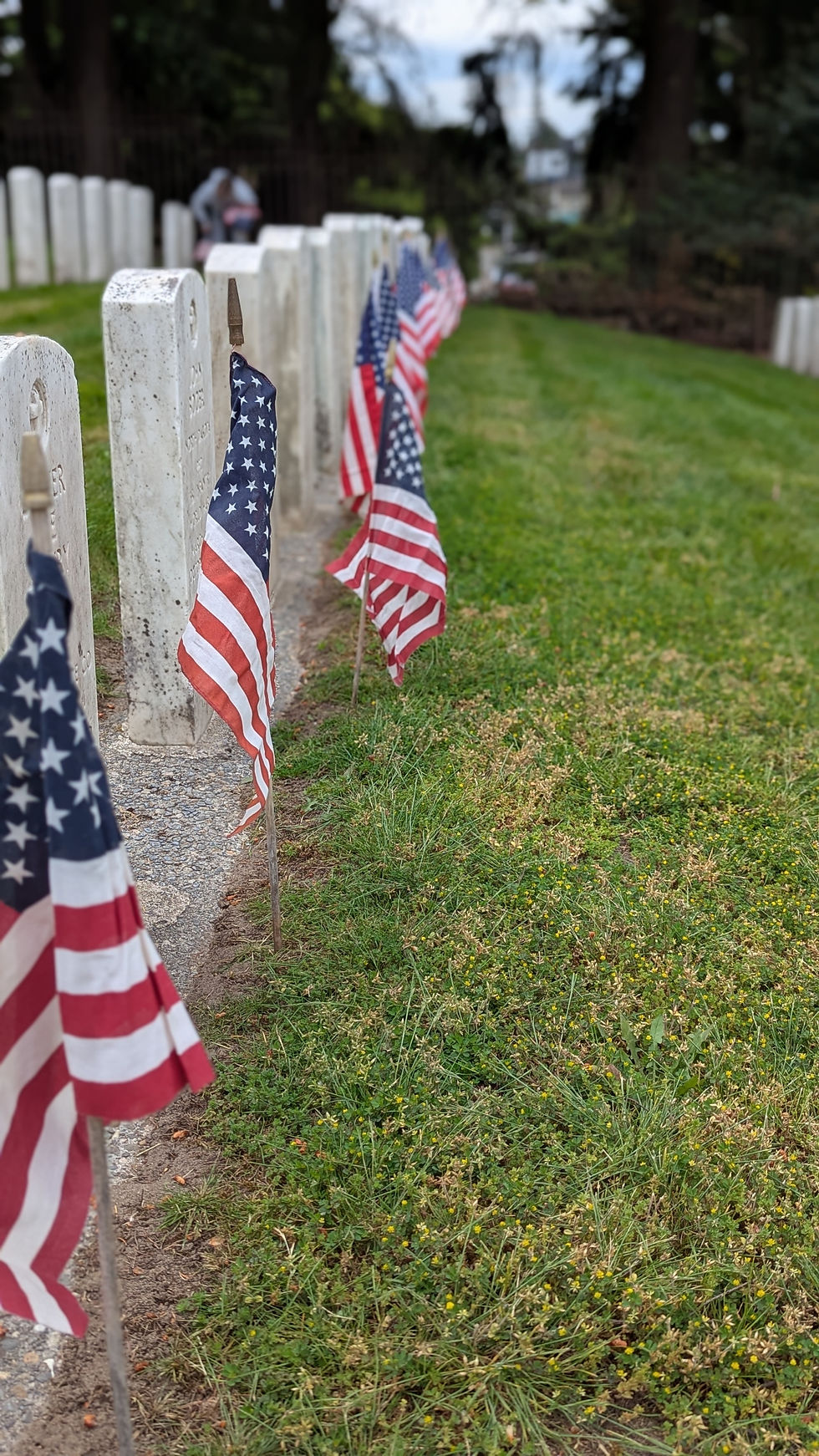
Memorial Day exists because humans forget. Businesses do too.
And when organizations lose institutional memory through layoffs, poor AI implementation, or operational churn, the downstream costs compound for years. I’ve had the displeasure of having to lay off more people than I can count and being on the receiving end of it as well. (Three times for those keeping score at home.)
Why the Same Playbook Keeps Failing
In each of those experiences, not one entity rebounded, recovered, or made their next great leap in innovation or market share. So where’s the breakdown? Why does the same playbook fail when the numbers and vision align?
Over the past three years some estimates have the global tech industry shedding an estimated 700K-900K jobs due to layoffs. Other industries haven’t fared much better.
Regardless of the cause: government policy changes, AI forecasts, COVID “corrections”, valuation chasing, or executive pressure, the knowledge bleed compounds for years.
The Memorial Day meaning and overlap with more job loss announcements inspired a desire to explore the real meaning, and cost, of memory from a business perspective. One assumes the knowledge gap hurts, but how long does it take to recover? What’s the real value of those let go, and the business impacts of those decisions in the long term?
Consider the story of Klarna. In 2023, Klarna's CEO Sebastian Siemiatkowski made headlines with a bold prediction: "AI can already do all of the jobs that we, as humans, do." The Swedish fintech giant seemed to prove this point by stopping all hiring, laying off 700 customer service workers while aggressively expanding AI-driven customer support operations. Initially, the move appeared brilliant. Klarna reported saving $10 million while their AI systems claimed to handle the workload of hundreds of employees.
The Klarna Reality Check
By 2025, the narrative had completely flipped. After the workforce dropped 40% and customer experience concerns began surfacing, Klarna began rehiring human agents. Siemiatkowski's admission: “We focused too much on efficiency and cost. The result was lower quality, and that's not sustainable.”
Klarna isn’t an outlier. MIT’s 2025 NANDA research found that most enterprise AI initiatives still struggle to demonstrate measurable P&L impact. The productivity gains promised to justify most AI-driven layoffs aren't showing up. The same pattern is playing out across federal restructurings — 317,000+ federal departures in 2025 with most institutional knowledge unrecovered.
So why do we seem to be making the same mistakes?
Where humans build deliberate, ritualized infrastructure for remembering (e.g. aviation safety, military After Action Reviews, NASA post-Challenger, etc.) the data shows we learn and succeed in delivering improved outcomes. The data is also overwhelming when we rely on cultural memory alone, showing that we forget almost completely within one to two generations. Memorial Day is architected to exist in the first category. Most organizations live in the second.
What Aviation Got Right
The cleanest evidence in modern industry that institutionalized remembering works comes from the aviation industry. The National Transportation Safety Board (NTSB) leads with a doctrine that investigates every accident, publishes findings, and updates the model. The result: dramatic safety improvements.
Fatal passenger and cargo airline accident rates declined by 80% from 1983–2000 (as measured in 100,000 flight hours).
Fatal accidents fell from 12.5% of total accidents during 1983–2000 to 4.1% during 2001–2017.
Industry-wide accident rates declined substantially from their 1994 peak as aviation embedded post-incident learning into operational practice.
Memory is Revenue Infrastructure
This is the CS, RevOps, MLOps problem most companies don't see — every layoff that walks process knowledge out the door makes the next quarter's outcome harder to forecast.
The Customer Success team brings in the “why” to the business. Nix CS, lose the “why”. RevOps ties that why to the revenue.
Can a machine extract the same meaning from measured behavior that humans derive from actual conversation?
MLOps is your quality control driven by subject matter experts in those algorithms and their intended outcomes. Are you confident the AI’s output can adapt to standards in a world that constantly changes?
Same logic in cybersecurity: every post-incident review that isn't read is the next breach waiting to happen.
In healthcare, the stakes become even higher when clinical workflow knowledge, patient handoff practices, or institutional care experience disappear faster than organizations can transfer them.
Eight Hundred Years of Forgetting
Unfortunately, the data shows we humans never seem to learn our lessons. Carmen Reinhart (Harvard) and Kenneth Rogoff (Harvard / former IMF chief economist) compiled a database of financial crises across sixty-six countries across five continents, presenting a comprehensive look at the varieties of financial crises across eight astonishing centuries of government defaults, banking panics, and inflationary spikes from medieval currency debasements to today's subprime catastrophe.
Their core finding: While countries do weather their financial storms, short memories make it all too easy for crises to recur.
Every generation, the experts say “this time is different”. Every generation repeats the same pattern anyway.
Looking at the data on boom-and-bust cycles that have occurred over the past 800 years, a clear pattern emerges.
Remembering is not the human default. Forgetting is.
Learning from prior sacrifice only happens when we build deliberate, ritualized, infrastructural memory systems against the constant pull of forgetting. Where we build them, we learn. Where we don't, the same mistakes recur with eerie precision across centuries. Memorial Day is a deliberate cultural mechanism designed to fight the same forgetting force that Reinhart-Rogoff documented across 800 years.
What This Means for Your Business
The implication for business is unavoidable:
Industries that built memory infrastructure (aviation, parts of medicine, NASA after Challenger) measurably saved lives and reduced repeat failures.
Industries that didn't (finance, most of corporate America, public health pre-2020) keep re-learning the same lessons through fresh suffering.
Implementing a R.O.A.D. or Circle of Care culture (both my models for operational continuity) from the start acts as a forcing function for more effective automation transitions and memory infrastructure buildouts.
The 2023–2025 wave of 2.69 million U.S. layoffs is the same pattern: companies repeating downsizing playbooks that 40+ years of research show don't work — because there is no institutional memory system to carry the lesson forward.
Every company will go through highs and lows. And sometimes those lows call for drastic changes. If you want to become a memorable company, you must institutionalize remembering. The data shows failure to do so leads to history repeating itself.
If you're a healthcare, healthtech, SaaS, or Customer Success leader trying to navigate AI adoption without losing trust, culture, or operational clarity, this is the work I do with executive teams.
Customer Success by Design
Healthcare AI | Customer Success | RevOps | Operational Strategy
Sources
Challenger, Gray & Christmas 2025 Year-End Report
MIT NANDA Initiative, The GenAI Divide: State of AI in Business 2025
Bloomberg / Business Insider coverage of Klarna AI reversal (2025)
Reinhart, C. & Rogoff, K. This Time Is Different (Princeton University Press, 2009)
National Transportation Safety Board, Survivability of Accidents Involving Part 121 Air Carrier Operations
U.S. Army Center for Army Lessons Learned (CALL)
LLM models were used to support research, grammar, and structural clarity. All thoughts, opinions, lived experiences, and recommendations are my own.


Comments